Memory Cache Collection 99
BLOC5 / Brussels, 2024
Mark1
20 prints on veil fabric, aluminium tubes, magnets
Variable sizes
Installation produced by MAC'S Grand Hornu, with the support of Fédération Wallonie Bruxelles
Revenants
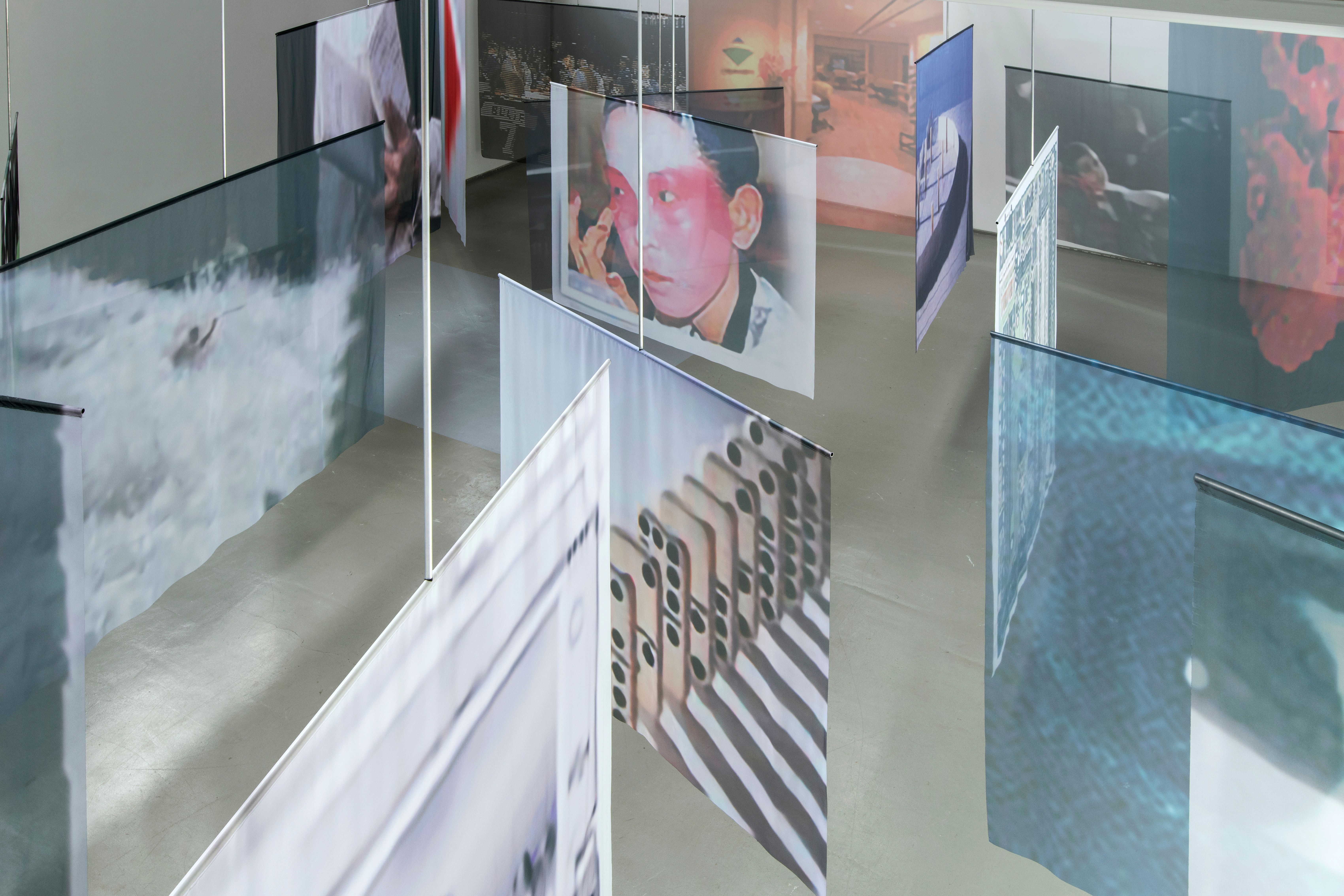
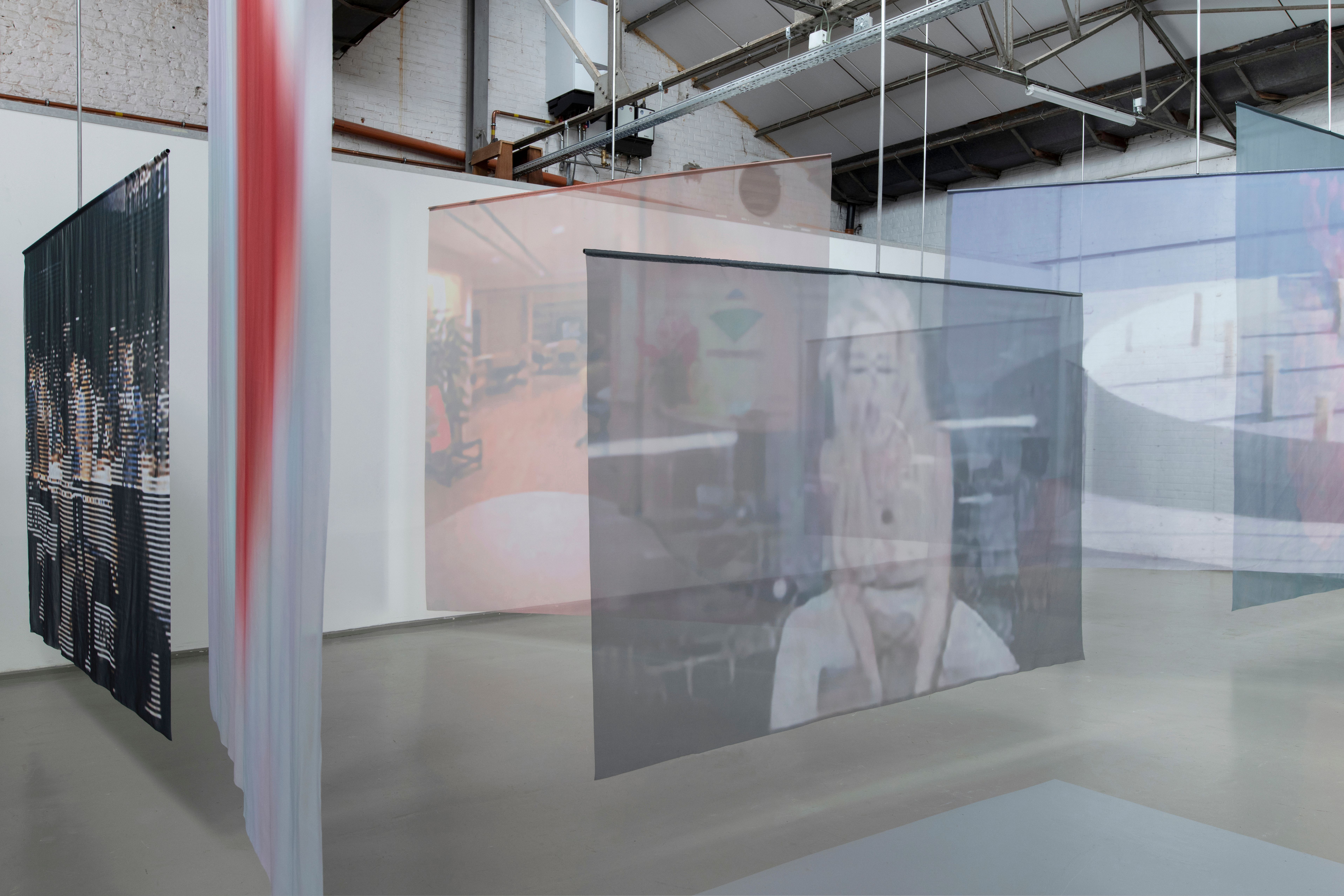
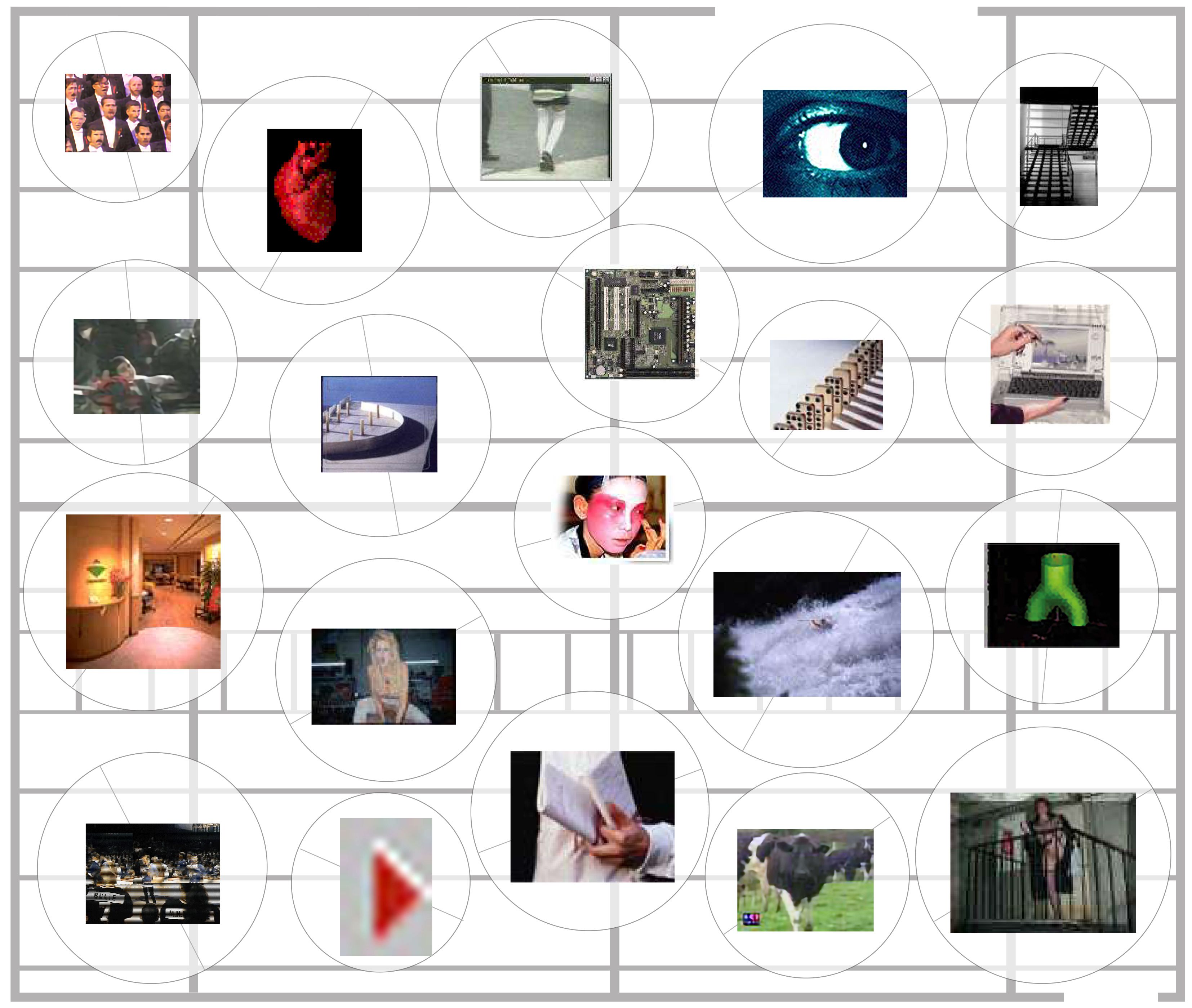
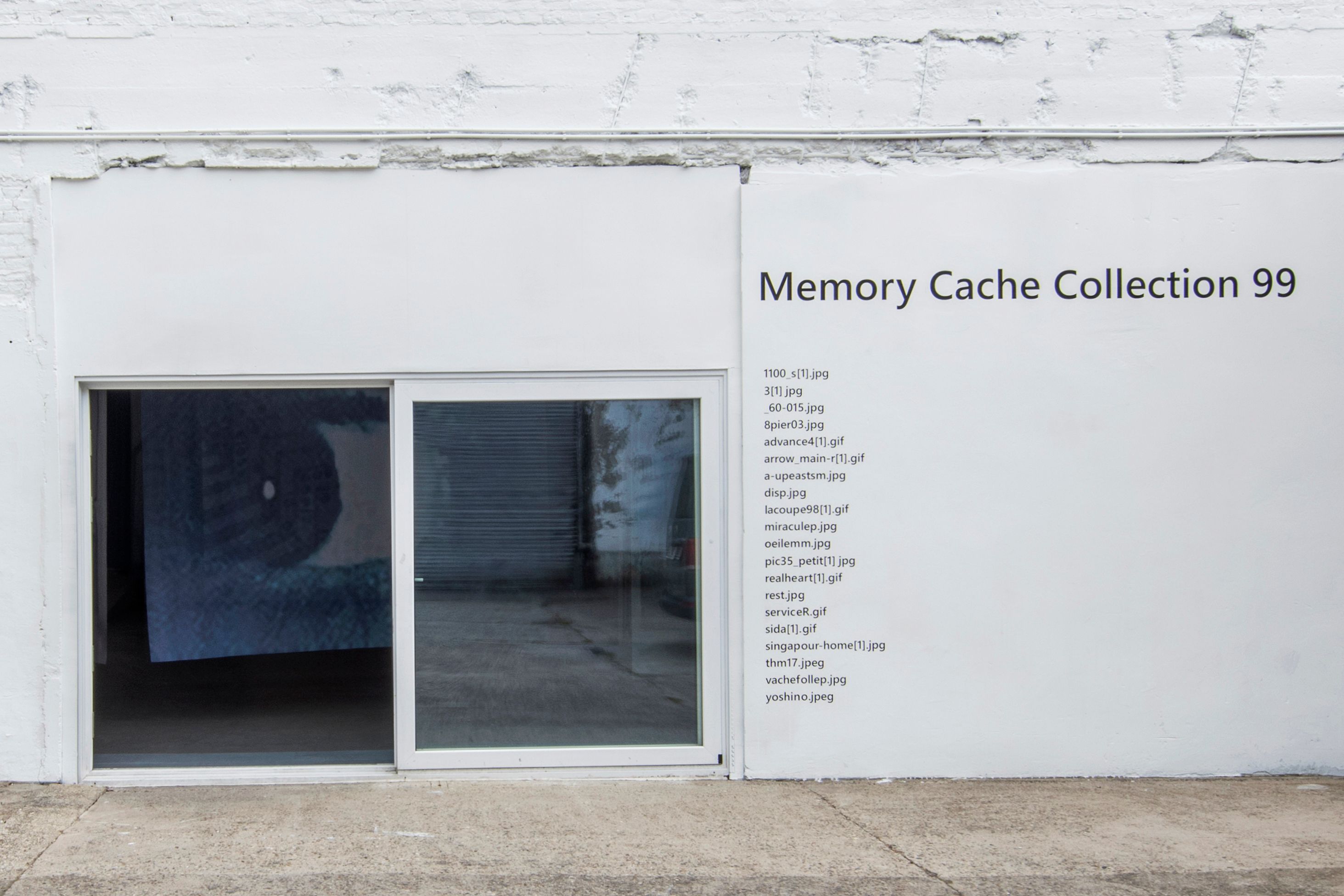
For a few weeks at La Vallée, Alec De Busschère orchestrates an environment of printed, fine veils in large formats. Suspended beneath the sheds and glass roof of the former warehouse, these translucent vellums form a mental antechamber for ghostly images, drawn from a stock of files built up twenty-five years ago. Entitled Memory Cache Collection 99, the installation is commissioned by MAC’s as an off-site exhibition. We must, therefore, return to 1999, when Alec De Busschère asked five acquaintances to grant him access to the “cache files” on their computers. This temporary storage unknowingly archives all files encountered by the computer, be they images, ads, texts, icons, or videos—much like a journey through a space from which we consciously retain only a few elements. The aim of this retrieval, however, is neither analytical nor statistical. Organised by contributors’ names, file sizes and types, dates of recording, the 13,439 caches are condensed into an elusive stream of images, a one-minute video entitled Keep the cache in memory. Names scroll by, accompanied by numbers, against the backdrop of a stereoscopic flickering of subliminal signals.
The work of looking
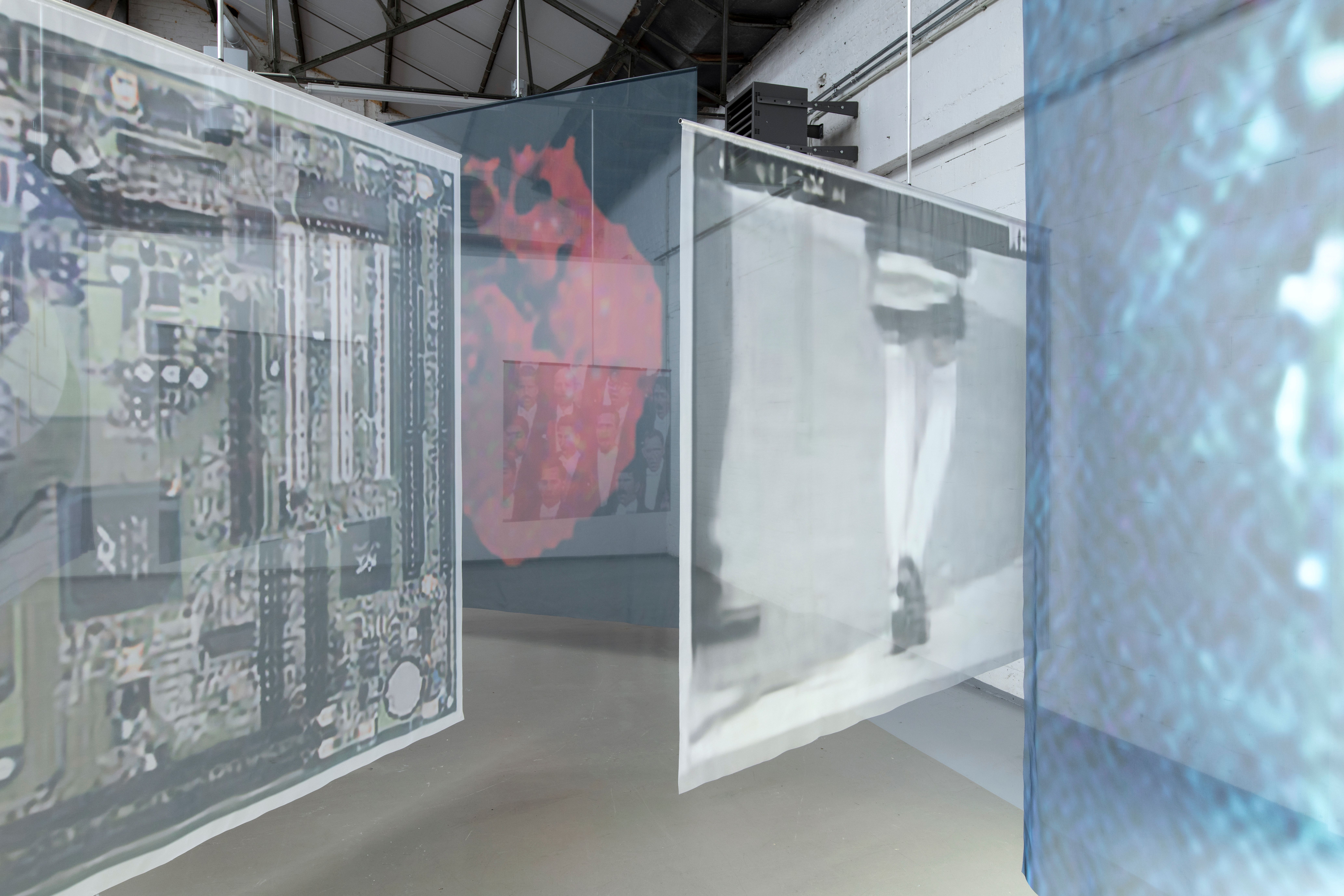
Twenty-five years on, the collection’s approach has almost reversed. It’s about inspecting the black box, analysing these images, most of them orphaned, un-situated, with no identifiable author or source, now absent from the web. They are like ghosts, like enigmas. Their evocative force, their power of attraction, is due in part to this mystery, to the buried memory that some of them awaken. They reveal current events, an imaginary world and imagery. A selection is then made from twenty-five source files, twenty-five images destined to be monumentalised and restored, but degraded and altered by the effects of compression, enlargement and printing . A return to physical space, and soon, with altered form and status, a return to the web, through spontaneous archiving and the “wild” proliferation of images. In short, regenerative, transformative archaeology. An initial stage of selection involves discarding files that, through reverse image search, are still found on the net. Additionally, a few key images stand out, including a strange, soft-erotic, “Lynchian” photography, bewitching, a possible narrative spark. Then there are images evoking the relationship between technological frameworks and tools: keyboard and screen manipulation, a memory card. Also, figures of city and architecture, a face applying makeup, a glowing heart, an abstraction, a detail… It is an editing process, a mix of framing, scales and contexts, of complementary and contrasting elements—chromatic, formal, figurative, textural…
Scenery
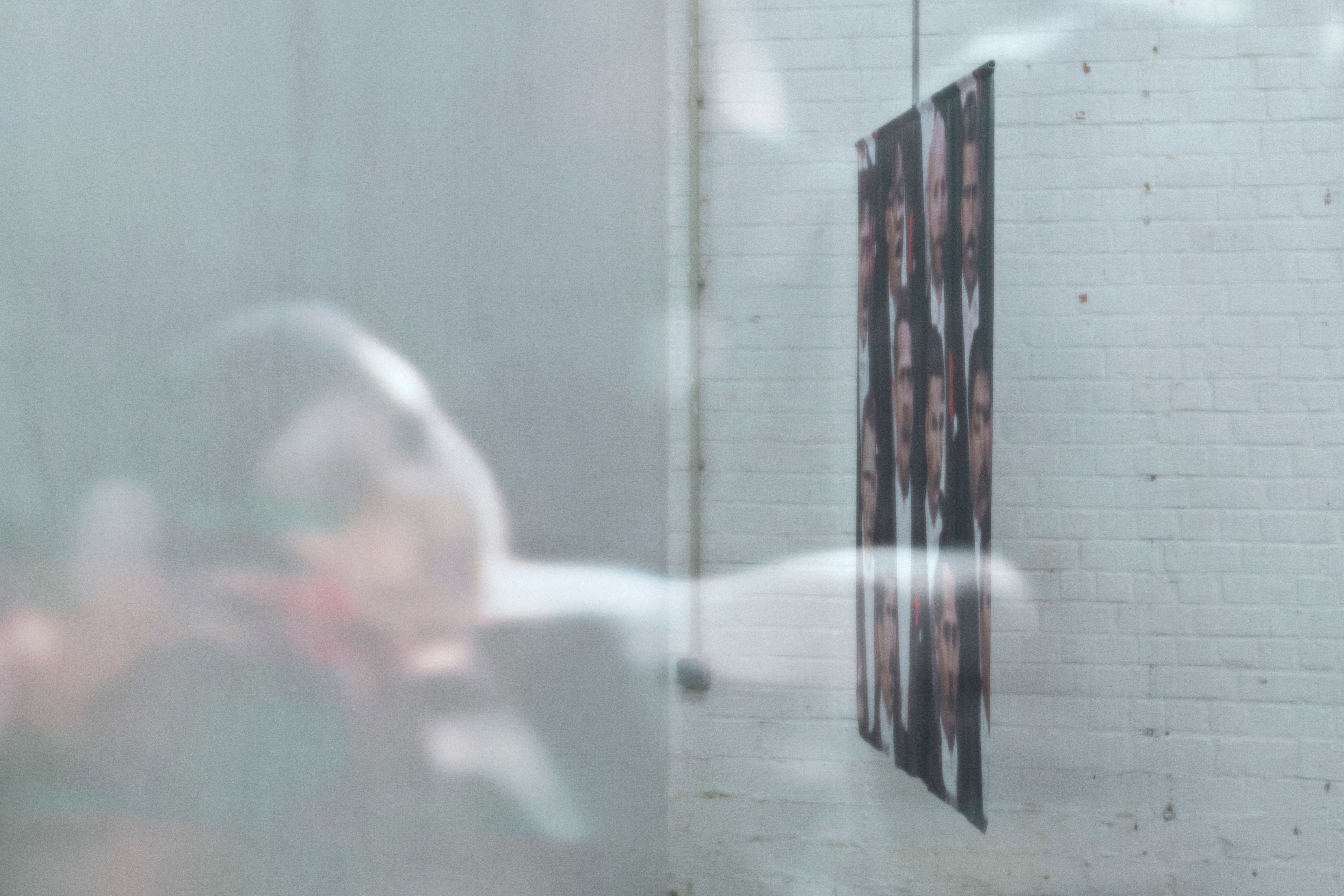
We actually know these images—not directly, but diffusely. They inhabit our imagination, activating our own library: photographic, cinematic, urban, literary. Even unidentified, they belong to our visual culture, to our subjectivity. And their staging in an environment, as “scenery,” will certainly immerse us in a kind of activation of this reservoir, this collective substrate. Fabrics suspended throughout the room: their translucency replays the effects of masking, superimposition, contamination. It’s like an inner antechamber, where experiences are indifferent and intermingle. Within each of us and in the magma of accumulated images. Moving images: the hanging system — a simple magnet per fabric — makes the device highly sensitive, quivering at the slightest air current, the slightest movement. Such a modulation makes it able to intermingle the interactions between the various plans. This slow mobility is contrasting with the collection’s original video-graphic use. Memory Cache Collection 99 evokes early image-animation devices, such as panoramas or georamas of the 19th century, or even the Theatre of Memory, a mnemonic environment designed by the Venetian humanist Giulio Camillo (1480–1544) in the early 16th century. Encyclopaedic in nature and universal in ambition, this project sought to activate, in the present, the tutelary images of the past, and visualise their projection into the present — materialised within the space of an amphitheater — from the perspective of the tribune (i.e. the spectator). There is no direct lineage between this setup and the installation at La Vallée. But the comparison makes it clearer how this installation diverges from immersive and virtual environments. Opposing high-tech and illusionistic practices, the “slowing down” and meditative suspension introduced by Alec De Busschère create a reflective distance, allowing us to contemplate the images and giving them space to reflect as well.
Laurent Courtens
First published in l’Art même N°94 p.37
Mark2
Mark1
Mark2